
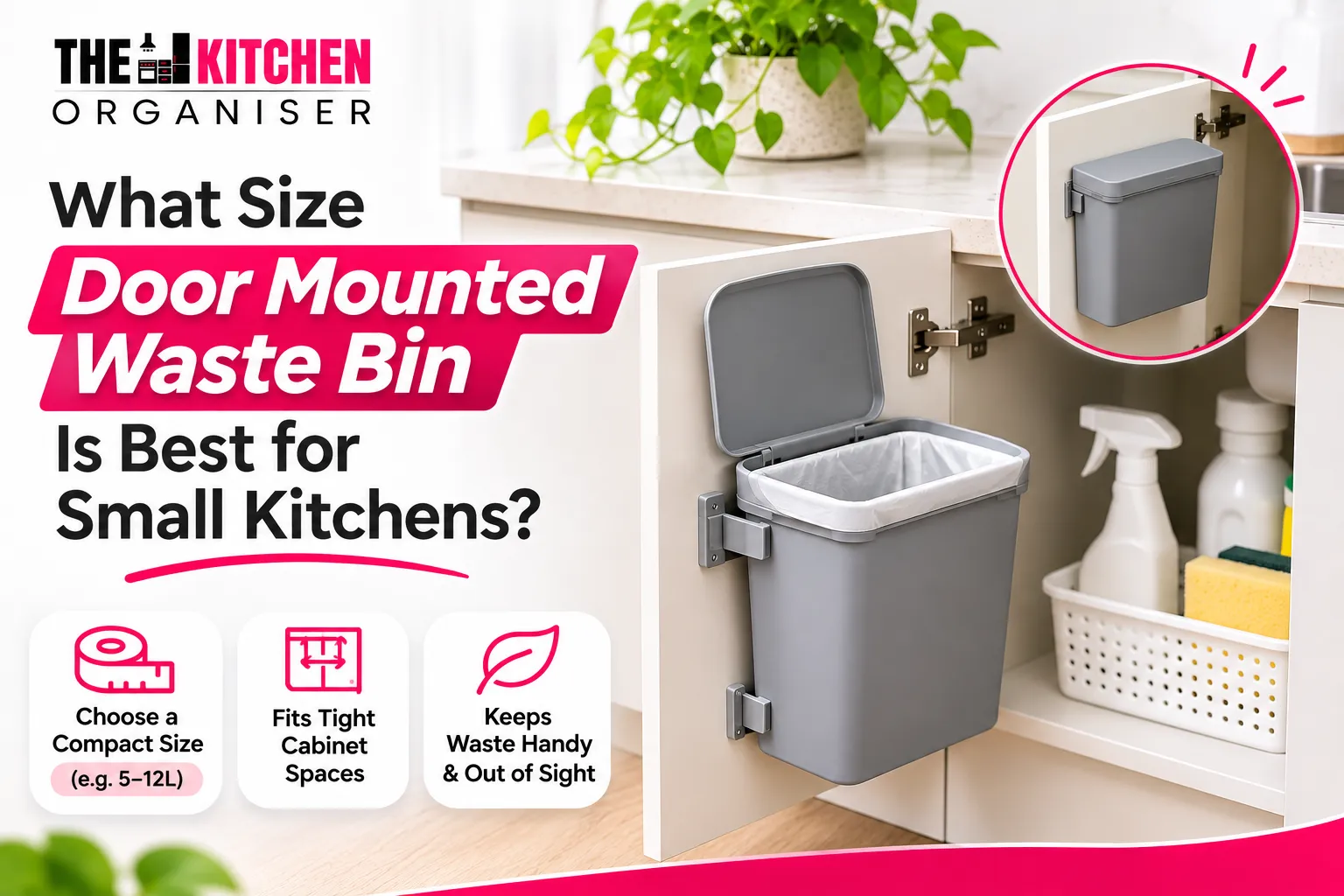
In a small kitchen, a freestanding bin always seems to be in the way, whether it’s beside the fridge, at the end of the bench or right where you need to stand. A door mounted bin solves this by moving rubbish inside a cupboard, where it swings out when you open the door and disappears when you close it. The question most people get stuck on is size. Too small and you’re emptying it every day. Too big and it won’t clear the hinges, the pipes or the shelf above. This guide shows you how to size a door mounted waste bin for your household and your cabinet.
Quick answer: For most small kitchens, a door mounted waste bin of 10–20 litres is the right starting point. Couples and small families usually suit 20–30 litres, and a double bin of around 30–40 litres works well if you separate rubbish from recycling. The cabinet’s internal width sets the limit. Many door-mount systems need a cabinet of at least 300–400 mm.
Why Do Door Mounted Bins Suit Small Kitchens?
Door mounted bins suit small kitchens because they use space inside a cupboard rather than floor space, and they open automatically with the door. That keeps walkways clear and puts rubbish within reach of the sink and prep bench.
-
No floor footprint: nothing to trip over in a narrow galley or apartment kitchen.
-
Hidden from view: rubbish stays behind a closed door, so the kitchen looks tidier.
-
Hands-free access: on door-operated models, opening the door brings the bin forward and, on some, lifts the lid.
-
Fits existing cabinets: most systems fit into a standard base cabinet with no carpentry.
-
Rubbish and recycling together: double models hold two buckets in one cupboard.
What Size Door Mounted Waste Bin Should You Choose?
Choose a door mounted waste bin based on how many people live in your home, how often you empty it and how much you recycle separately. As a guide, a single person needs 5–10 litres, a couple 10–20 litres and a small family 20–30 litres.
|
Household |
Suggested capacity |
Typical style |
|
Single person |
5–10 litres |
Compact bin hung on the door |
|
Couple |
10–20 litres |
Single door-operated bin |
|
Small family |
20–30 litres |
Single or small double |
|
Larger household |
30–40 litres or more |
Double bin on a frame or runners |
Bigger isn’t automatically better: a bin emptied every few days is more hygienic than one holding scraps for a week. If your council collects food organics (FOGO) and you use a separate caddy, you can usually drop a size for general waste.
One more thing to check: on double bins, look at the size of each bucket. A 30-litre double usually means two 15-litre buckets, not one big one.
How Does Cabinet Size Limit Your Bin Size?
Your cabinet’s internal width, depth and height set the maximum bin size, and the bin’s mounting style decides how much weight the door can take. Always compare the product’s minimum cabinet size with your cabinet’s internal measurements, not its outside width.
As a rough guide to standard Australian base cabinets:
-
300 mm cabinet: compact single bins, roughly 10–20 litres.
-
400 mm cabinet: larger singles or slim doubles. For example, Wesco’s 40-litre door-linked double lists a minimum cabinet width of 400 mm.
-
450–600 mm cabinet: full-size doubles and higher-capacity systems.
A cabinet sold as 400 mm wide usually has 30–40 mm less usable width once you subtract the side panels and hinges. Measure from the back of the closed door to the rear wall for depth, and from the floor to the lowest obstruction, such as a shelf or the sink trap, for height. Leave headroom so the lid can open and the bucket lifts out.
Door-Hung vs Door-Linked: How Mounting Affects Capacity
The mounting style matters as much as the litres. Door-hung bins screw straight onto the inside of the door, so the door and hinges carry the full weight. Keep these compact, around 5–15 litres. Door-operated and door-linked bins sit on a frame or cabinet runners and use the door only to pull the bin forward, so they can safely carry 20–40 litres or more.
If your current bin fills up in a day or two, choose a frame or runner system rather than hanging a larger bin on the door. For the biggest capacities, compare with pull-out bins, which carry all the weight on runners.
Single or Double Door Mounted Kitchen Bins?
Choose a single bin if the cupboard is narrow or you already keep recycling elsewhere. Choose a double if you want rubbish and recycling in one place. In most small kitchens, a slim double is the most useful single upgrade you can make.
Single door mounted kitchen bins are lighter and fit a 300 mm cabinet more easily. Doubles take more width but save a second recycling bin on the floor.
What Features Matter Most in a Small Kitchen Bin?
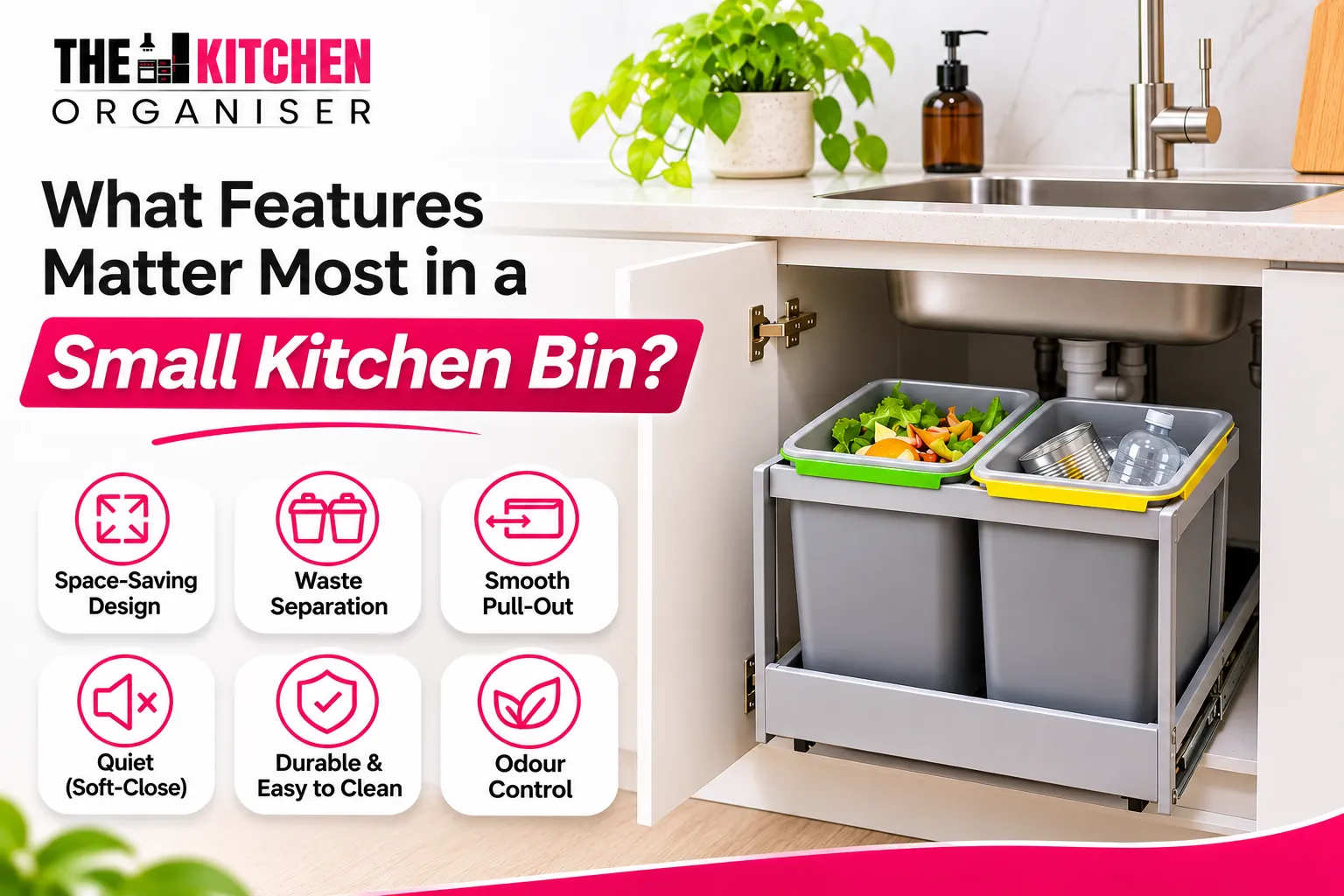
Beyond capacity, look for a smooth mechanism, removable buckets, easy-clean materials and hardware rated for daily use.
-
Smooth mechanism: swings or glides out without catching the hinges.
-
Removable buckets: lift out to empty and wash.
-
Lid and corrosion-resistant fittings: contain odours and handle moisture under a sink.
-
Spare parts: brands such as Kia Ora sell door brackets and replacement buckets separately, so check whether a listing is a complete system or an add-on.
Can You Fit a Door Mounted Bin Under the Sink?
Yes, as long as the bin can swing past the drain, water lines and any filter without touching them. Under-sink cupboards often suit a compact door mounted bin, because the bin uses the space just behind the door, in front of the pipes.
Keep the isolation valves easy to reach and leave room for plumbing maintenance. If the sink cupboard is too crowded, fit the bin in the next cupboard along.
Common Sizing Mistakes to Avoid
-
Comparing litres, not dimensions: two 20-litre bins can have very different shapes.
-
Hanging too much on the door: large loads strain the hinges, so use a frame or runner system instead.
-
Ignoring the minimum cabinet width: check this before checking capacity.
Why Choose The Kitchen Organiser?
The Kitchen Organiser has a dedicated range of door mounted kitchen bins for Australian cabinets, alongside the wider kitchen bins collection.
-
Door-hung, door-operated and door-linked bins in single and double configurations.
-
Trusted brands including Wesco and Kia Ora.
-
Brackets and replacement buckets sold separately.
-
Free shipping Australia-wide on orders over $200.
About Us
The Kitchen Organiser is an Australian online store for people who want kitchens that are easier to live with. We stock kitchen bins, pull-out and corner fittings and laundry storage from trusted brands, and we focus on helping you find products that fit the space you actually have.
Frequently Asked Questions
What size door mounted bin do I need?
Most small households suit a 10–20 litre door mounted bin, and small families suit 20–30 litres. Check the product’s minimum cabinet width against your cabinet’s internal measurement before choosing a capacity.
How much weight can a door mounted bin hold?
It depends on the mounting. A bin hung directly on the door relies on the hinges, so keep it compact and check the manufacturer’s load limit. Door-linked bins on a frame or runners carry more because the cabinet takes the weight.
Do door mounted bins fit in a 300 mm cabinet?
Yes, many compact door mounted bins suit a 300 mm cabinet, usually in the 10–20 litre range. Larger doubles generally need 400 mm or more.
Are door mounted bins good for small kitchens?
Yes. They free up floor space, hide rubbish behind the door and open hands-free, which makes them one of the most practical bin styles for compact kitchens.
Final Thoughts on Choosing a Door Mounted Waste Bin
For most small kitchens, a 10–20 litre door mounted waste bin is the sweet spot, stepping up to 20–40 litres or a double for families. Measure the cabinet’s internal width first, match the mounting style to the weight you’ll carry, and you’ll free up floor space without fighting your cupboard every day.